The Private Key to Public Walls: Inside the Casa de León Trotsky
Just a ten-minute walk from the Museo Frida Kahlo – the famous Casa Azul – sits a home that is low, enclosed, and painted in warm terracotta and yellow tones. It is centred around a cactus-filled courtyard that seems designed for stillness rather than history. Only when you begin to understand who lived here does the meaning of the place begin to shift.
Now known as the Museo Casa de León Trotsky, the residence remains – despite the violence that ended its most famous inhabitant’s life – curiously human. It offers political context and revolutionary history, certainly, but above all it feels like a place where people cooked, slept, argued, worried, and tried to build some fragile sense of safety in exile.
The house forms part of a wider Coyoacán story that includes the nearby Casa Azul. For a brief and extraordinary period, the lives of Leon Trotsky, Frida Kahlo, and Diego Rivera overlapped here – a concentration of politics, art, ideology, and emotion that still seems to linger in the neighbourhood’s quiet streets.
Trotsky arrived in Mexico in 1937 after years of displacement across Europe and Asia. Granted asylum largely through Rivera’s lobbying efforts, he initially entered the vibrant and intensely political world of Casa Azul itself.
But personal and political loyalties soon fractured. It is widely accepted that Kahlo and Trotsky embarked upon a brief but intense affair. Whether the rupture came from Rivera discovering the relationship, from growing ideological tensions between the two men, or from both at once, the atmosphere eventually soured. Trotsky moved only a short walk away into what would become his final home.
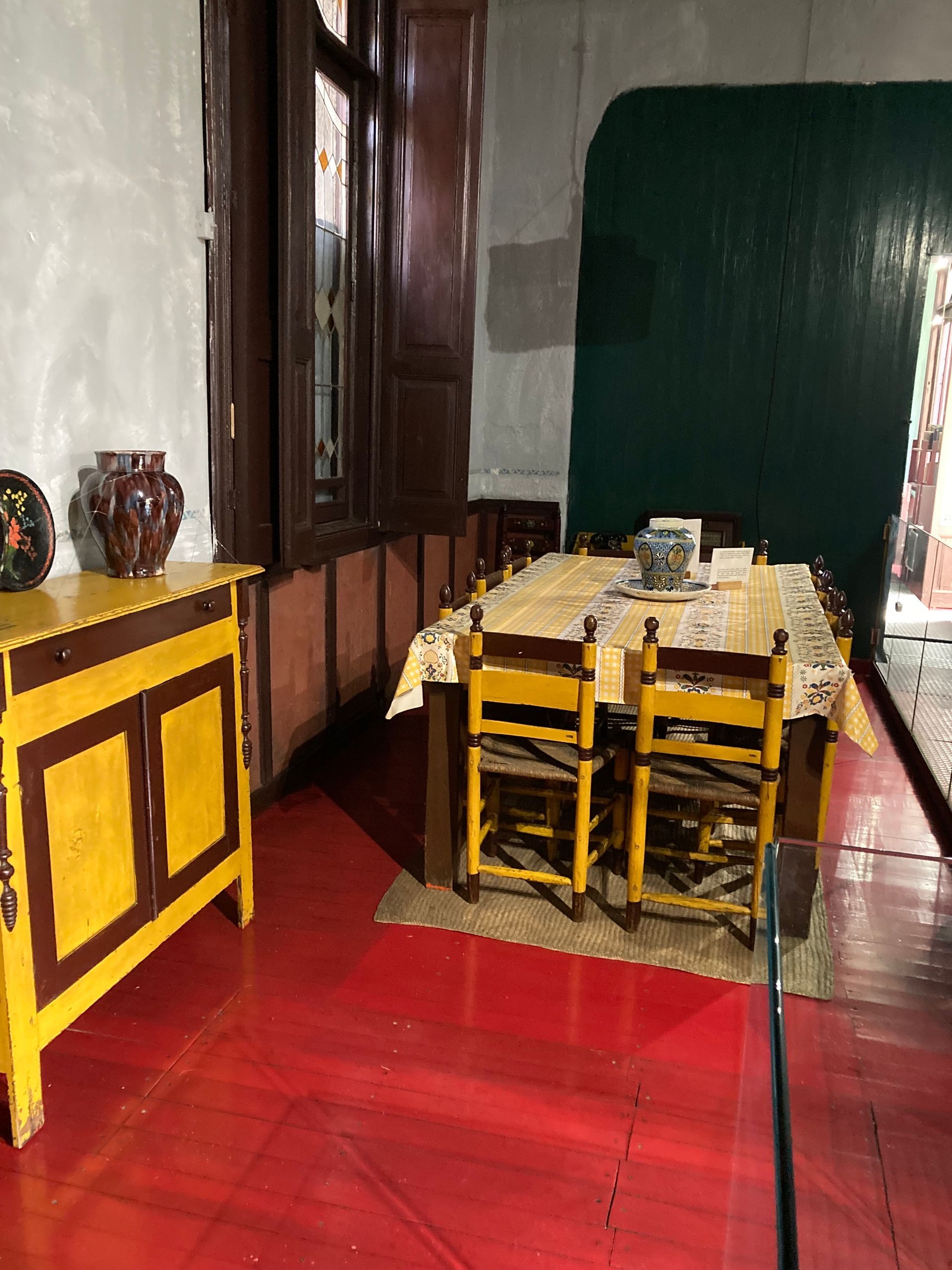
There is something disarming about the house today because it refuses to behave like a grand monument. The rooms still feel like rooms rather than exhibits: a kitchen that looks as though someone might return to it at any moment; shelves crowded with books; a courtyard alive with cacti and sunlight. This was not a staged revolutionary headquarters. It was a domestic space that happened to belong to a revolutionary.
That tension between the ordinary and the extraordinary shattered in May 1940. In the middle of the night, a hit squad led by the celebrated muralist David Alfaro Siqueiros stormed the compound, spraying the bedrooms with machine-gun fire.
The survival story from that night still carries a sense of frantic disbelief. Trotsky and his wife, Natalia Sedova, survived only by rolling themselves off the bed and flattening themselves against the floor with almost instinctive speed. Yet the scene was far from victimless. In the adjoining room, Trotsky’s young grandson, Seva Volkov, was wounded as bullets tore through his mattress.
That detail punctures any temptation to view the house merely as a symbolic battleground of ideology. Behind the high walls and reinforced doors lived a family – including a child – under literal siege. After the raid, the house changed visibly. Windows were bricked up. Guard towers were added. The refuge became a bunker. Yet, crucially, it never entirely stopped feeling like a home.
Perhaps the most unexpectedly peaceful part of the visit is the garden. It remains quiet and enclosed, still containing the hutches where Trotsky kept rabbits and chickens. There is something deeply moving in this image: a man associated with global revolution finding comfort in the repetitive care of small animals and ordinary routines.
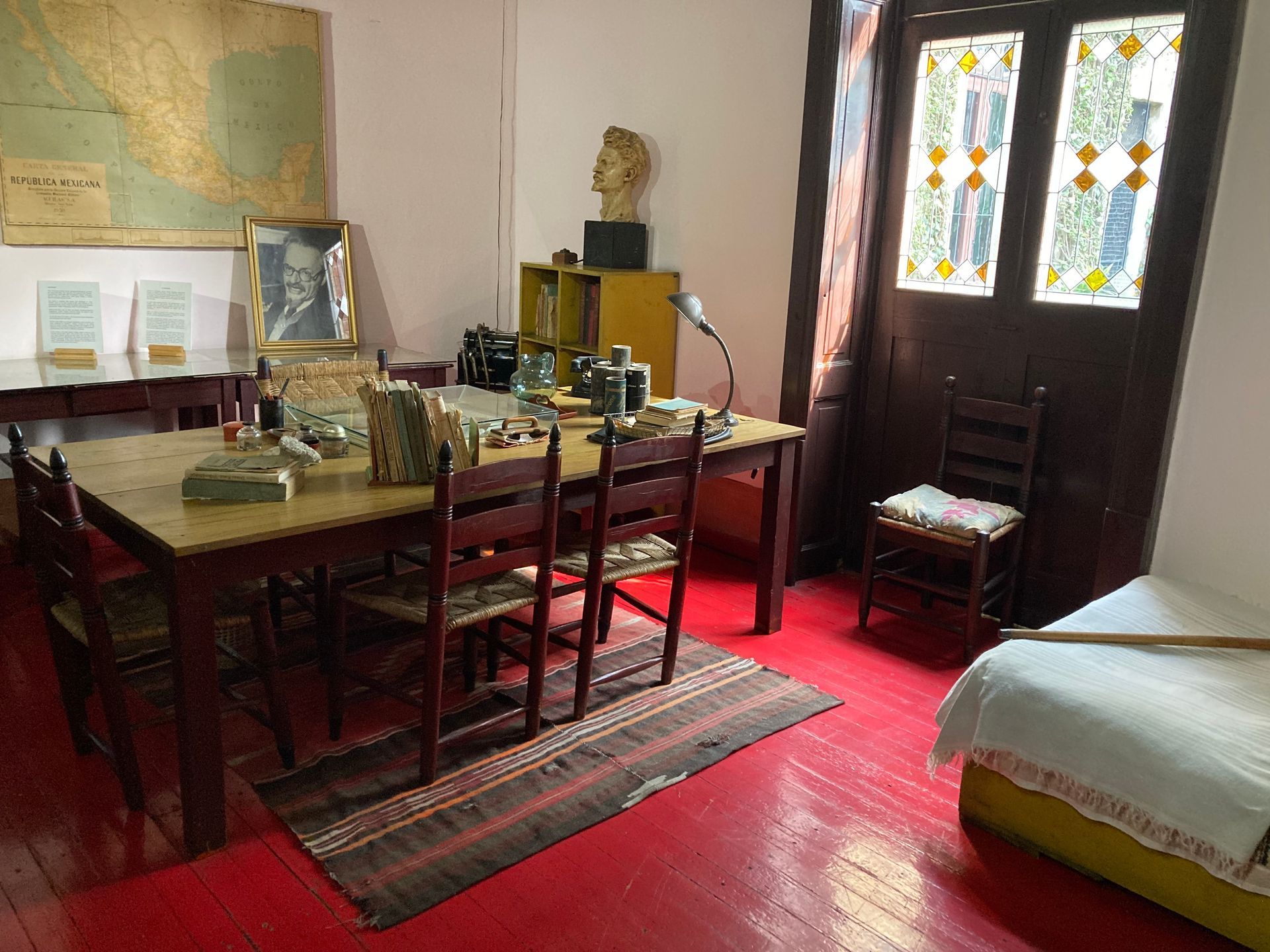
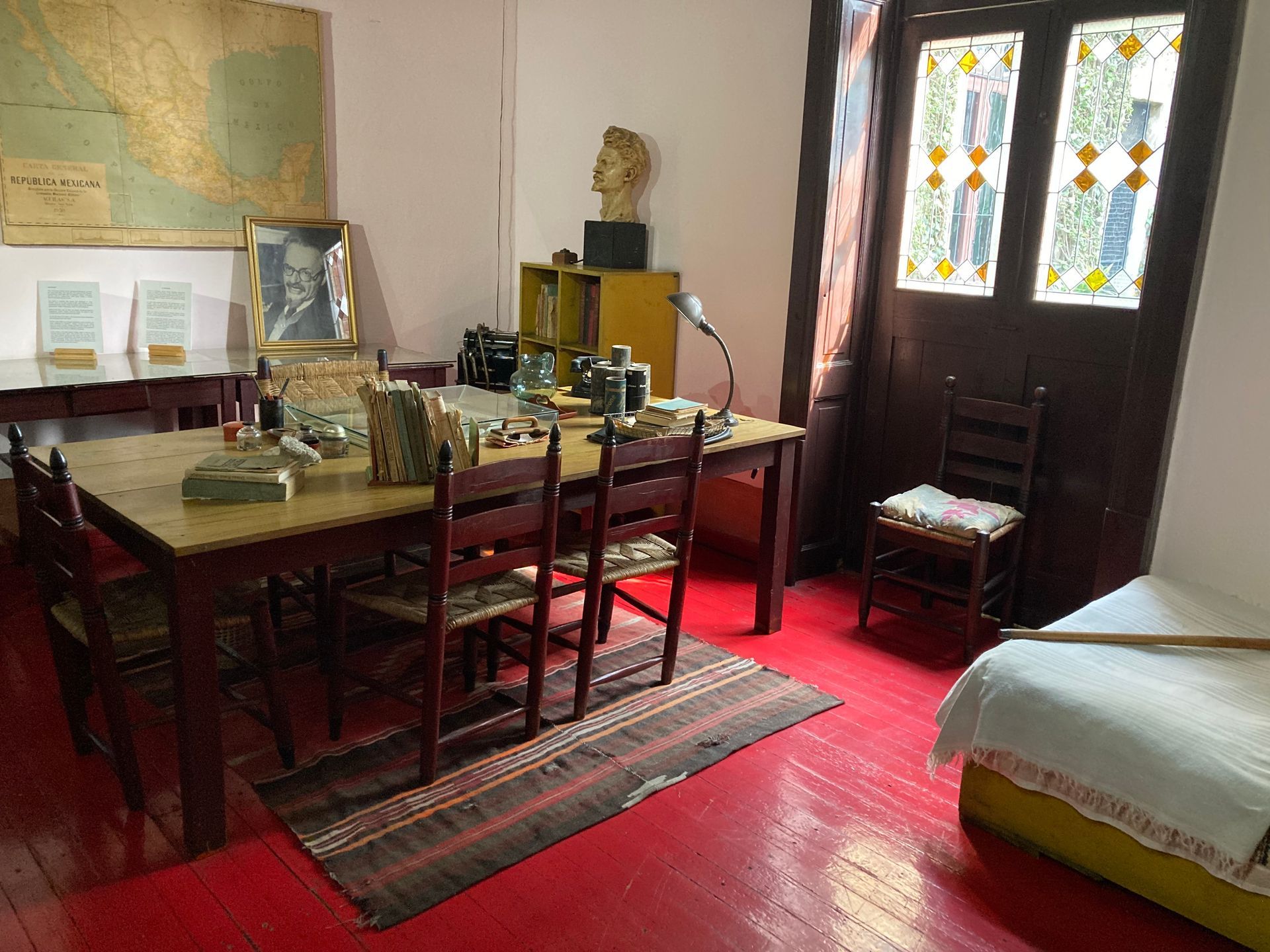
The study is the most charged room of all precisely because it is so restrained. This is where Trotsky worked, wrote, argued, and ultimately died after being struck with an ice axe in August 1940. His desk remains cluttered with books, papers, and his familiar round spectacles. Nothing has been theatrically reconstructed to heighten the drama. Instead, the room carries the unsettling feeling that time simply stopped mid-thought.
The house also offers a powerful lesson in the fractured history of the Russian Revolution, particularly the bitter conflict between Joseph Stalin and Trotsky following the death of Vladimir Lenin. After Lenin died in 1924, Stalin used Trotsky’s absence from the funeral – likely helped by misleading information about the date – to present himself as Lenin’s true heir and gain a crucial political advantage in the struggle for power.
Understanding that ideological struggle changes the way you see Rivera’s murals afterwards. His works become not merely celebrations of revolution, but visual battlegrounds of competing futures. You begin to notice the tension between Trotsky’s idea of 'Permanent Revolution' and the rigid, state-controlled reality that emerged under Stalin’s Soviet Union.
Seen in that light, Rivera’s mural Man, Controller of the Universe becomes more than art. The inclusion of Trotsky among its figures is not decorative; it is a declaration about the direction history should have taken.
And that is what makes Trotsky’s house in Coyoacán so compelling. Rivera’s murals are vast, public, political statements painted across walls and staircases. But the house is the private key to understanding them – the domestic, vulnerable world hidden behind the slogans, manifestos, and revolutions.Just a ten-minute walk from the Museo Frida Kahlo — the famous Casa Azul — it is low, enclosed, and painted in warm terracotta and yellow tones, centred around a cactus-filled courtyard that seems designed for stillness rather than history. Only when you begin to understand who lived here does the meaning of the place begin to shift.
Now known as the Museo Casa de León Trotsky, the residence remains — despite the violence that ended its most famous inhabitant’s life — curiously human. It offers political context and revolutionary history, certainly, but above all it feels like a place where people cooked, slept, argued, worried, and tried to build some fragile sense of safety in exile.
The house forms part of a wider Coyoacán story that includes the nearby Casa Azul. For a brief and extraordinary period, the lives of Leon Trotsky, Frida Kahlo, and Diego Rivera overlapped here — a concentration of politics, art, ideology, and emotion that still seems to linger in the neighbourhood’s quiet streets.
Trotsky arrived in Mexico in 1937 after years of displacement across Europe and Asia. Granted asylum largely through Rivera’s lobbying efforts, he initially entered the vibrant and intensely political world of Casa Azul itself.
But personal and political loyalties soon fractured. It is widely accepted that Kahlo and Trotsky embarked upon a brief but intense affair. Whether the rupture came from Rivera discovering the relationship, from growing ideological tensions between the two men, or from both at once, the atmosphere eventually soured. Trotsky moved only a short walk away into what would become his final home.
There is something disarming about the house today because it refuses to behave like a grand monument. The rooms still feel like rooms rather than exhibits: a kitchen that looks as though someone might return to it at any moment; shelves crowded with books; a courtyard alive with cacti and sunlight. This was not a staged revolutionary headquarters. It was a domestic space that happened to belong to a revolutionary.
That tension between the ordinary and the extraordinary shattered in May 1940. In the middle of the night, a hit squad led by the celebrated muralist David Alfaro Siqueiros stormed the compound, spraying the bedrooms with machine-gun fire.
The survival story from that night still carries a sense of frantic disbelief. Trotsky and his wife, Natalia Sedova, survived only by rolling themselves off the bed and flattening themselves against the floor with almost instinctive speed. Yet the scene was far from victimless. In the adjoining room, Trotsky’s young grandson, Seva Volkov, was wounded as bullets tore through his mattress.
That detail punctures any temptation to view the house merely as a symbolic battleground of ideology. Behind the high walls and reinforced doors lived a family — including a child — under literal siege.
After the raid, the house changed visibly. Windows were bricked up. Guard towers were added. The refuge became a bunker. Yet, crucially, it never entirely stopped feeling like a home.
Perhaps the most unexpectedly peaceful part of the visit is the garden. It remains quiet and enclosed, still containing the hutches where Trotsky kept rabbits and chickens. There is something deeply moving in this image: a man associated with global revolution finding comfort in the repetitive care of small animals and ordinary routines.
The study is the most charged room of all precisely because it is so restrained. This is where Trotsky worked, wrote, argued, and ultimately died after being struck with an ice axe in August 1940. His desk remains cluttered with books, papers, and his familiar round spectacles. Nothing has been theatrically reconstructed to heighten the drama. Instead, the room carries the unsettling feeling that time simply stopped mid-thought.
The house also offers a powerful lesson in the fractured history of the Russian Revolution, particularly the bitter conflict between Joseph Stalin and Trotsky following the death of Vladimir Lenin. After Lenin died in 1924, Stalin used Trotsky’s absence from the funeral — likely helped by misleading information about the date — to present himself as Lenin’s true heir and gain a crucial political advantage in the struggle for power.
Understanding that ideological struggle changes the way you see Rivera’s murals afterwards. His works become not merely celebrations of revolution, but visual battlegrounds of competing futures. You begin to notice the tension between Trotsky’s idea of “Permanent Revolution” and the rigid, state-controlled reality that emerged under Stalin’s Soviet Union.
Seen in that light, Rivera’s mural Man, Controller of the Universe becomes more than art. The inclusion of Trotsky among its figures is not decorative; it is a declaration about the direction history should have taken.
And that is what makes Trotsky’s house in Coyoacán so compelling. Rivera’s murals are vast, public, political statements painted across walls and staircases. But the house is the private key to understanding them — the domestic, vulnerable world hidden behind the slogans, manifestos, and revolutions.