Oaxaca: Two Weeks in the South
February 2026
We took the ADO Executive Class bus from Mexico Norte at 6.15am. The journey to Oaxaca took around seven hours. The seats reclined, and there were individual screens with a good choice of films and television. We left the city as the sun was still low, and within an hour the landscape had changed completely.
Popocatépetl was visible from the window, smoking. Then came the cactus fields: hundreds of hectares at first, then hillsides covered, then whole mountainsides. The variety increased the further south we went. Closer to Oaxaca, the cactus gave way to a wide range of trees. Oaxaca sits at a higher altitude than it appears on a map.
We stayed in a one-bedroom apartment at the Hotel Parador de Santo Domingo de Guzmán — basic but with every amenity we wanted, plus a swimming pool. It is a very popular hotel, with a community feel, friendly staff, and an excellent location in the heart of the historic centre.
The Zócalo that first evening was full: restaurants and bars on all sides, families on the cathedral steps, a full band in the centre of the square, including six xylophone players performing simultaneously. Oaxaca felt immediately more manageable than Mexico City: smaller in scale, quieter, easier to read.
— — —
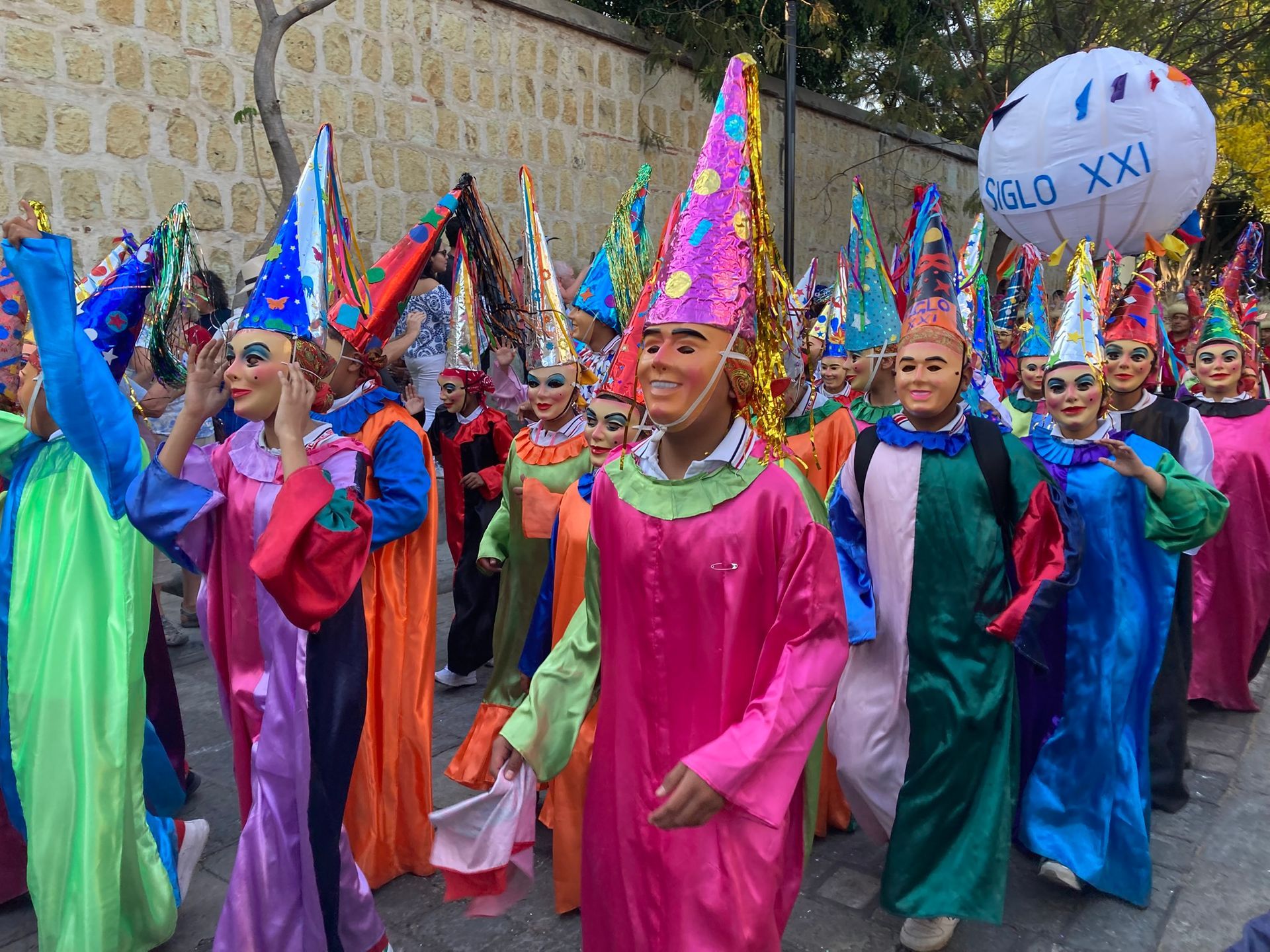
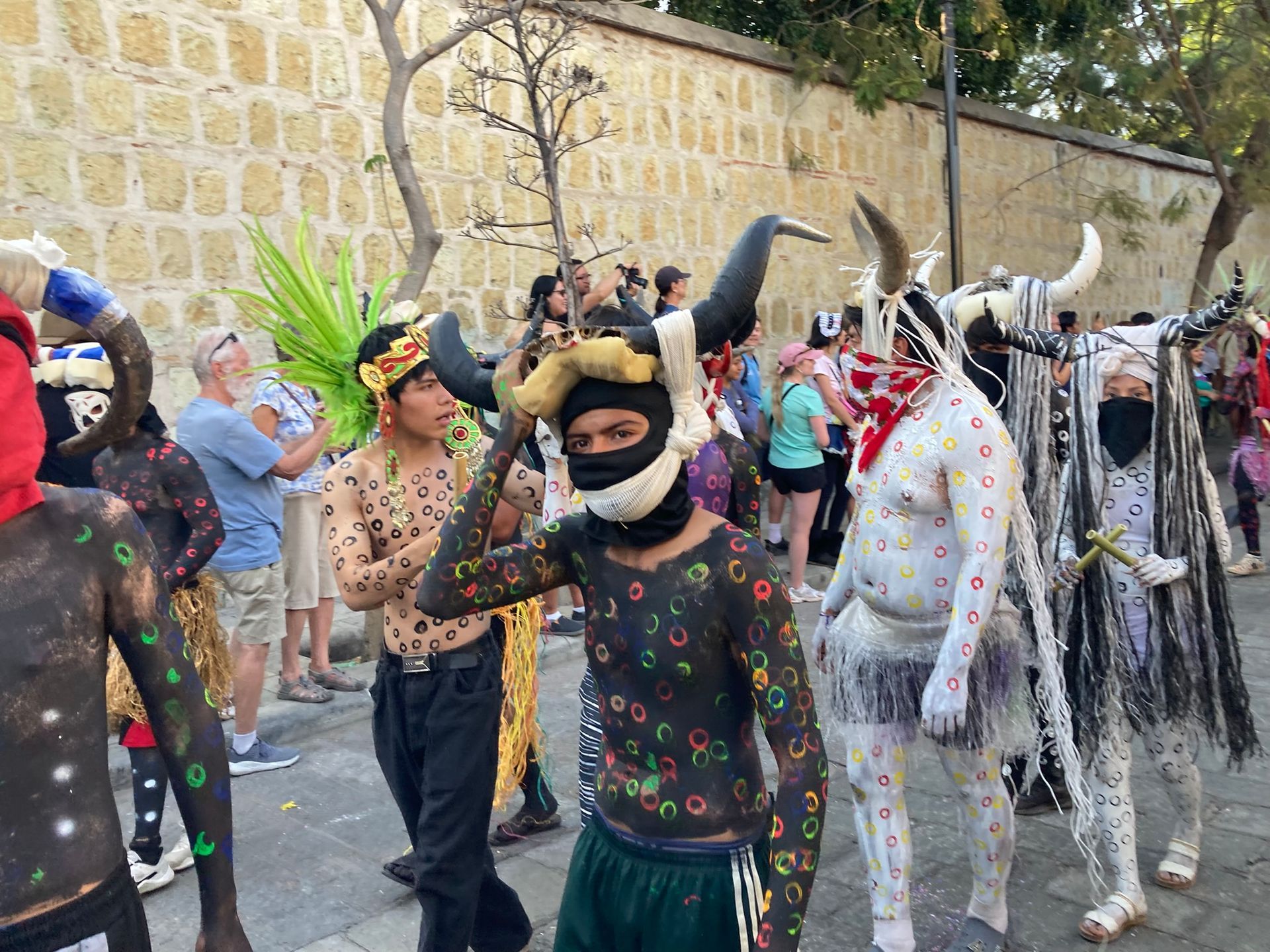
Our first Mexican fiesta took place on our first Saturday. This annual showcase brought communities from across Oaxaca together for a procession that set off from the Jardín Carbajal along Macedonio Alcalá and down to the Plaza de la Danza. It ran for hours into the night. Masked figures moved through the crowd in elaborate costumes — some grotesque, some comic — working the audience with a confidence that spoke of deep local tradition. Bandas de guerra kept up the musical beat behind each group with trumpets, trombones, and drums.
The following Saturday, there were five weddings in the city. Each brought its own fiesta, its own band, its own procession weaving through the streets. By evening, the competing music reached us from different directions simultaneously.
On another day, we came across a different kind of celebration: a fiesta for a local doctor, held in the street, with the host providing food and drinks for everyone who gathered.
Oaxaca's appetite for celebration turned out to be one of its defining qualities — the city knows how to have a good time, and there is no reason to apologise for it.
— — —
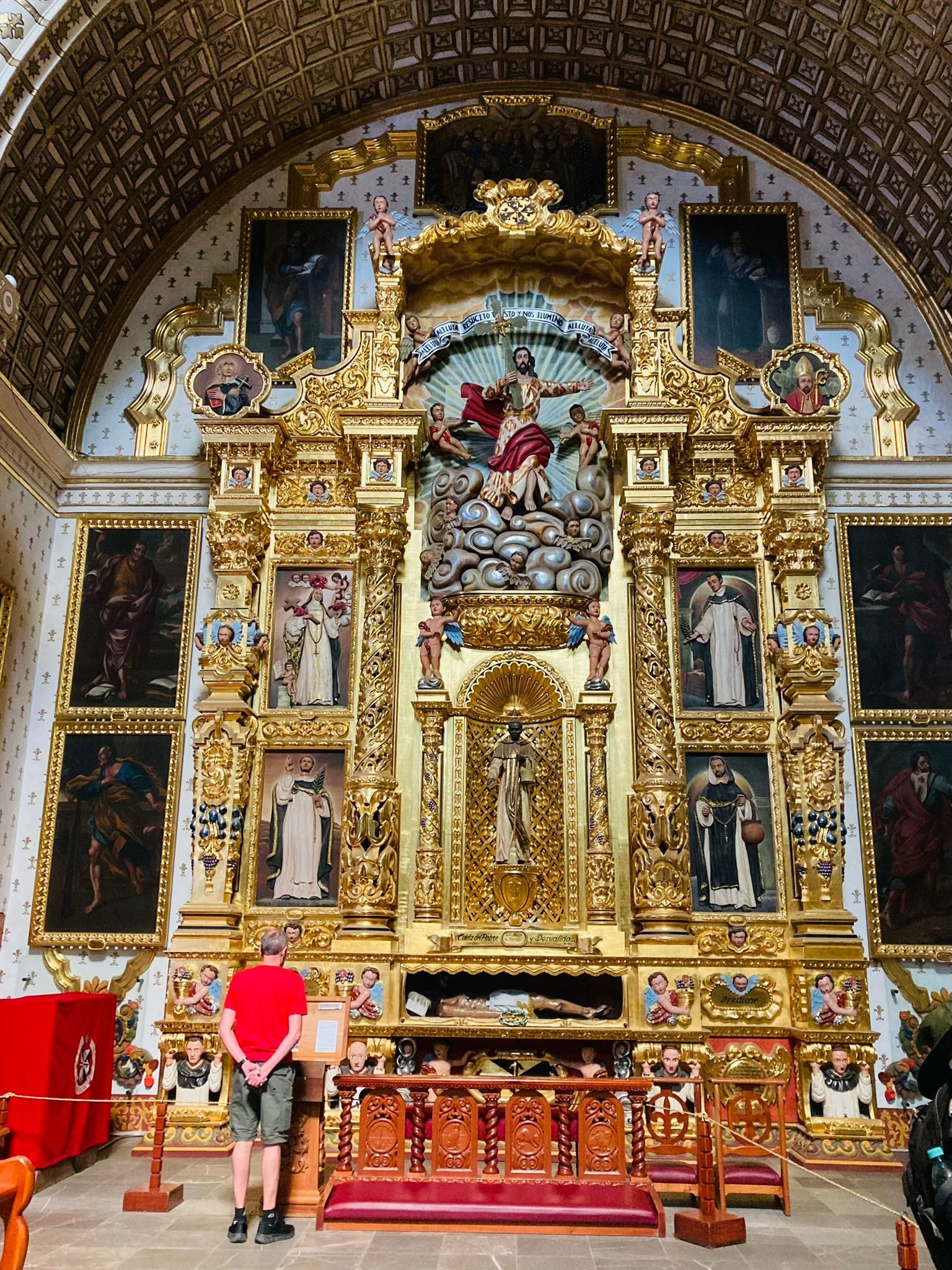
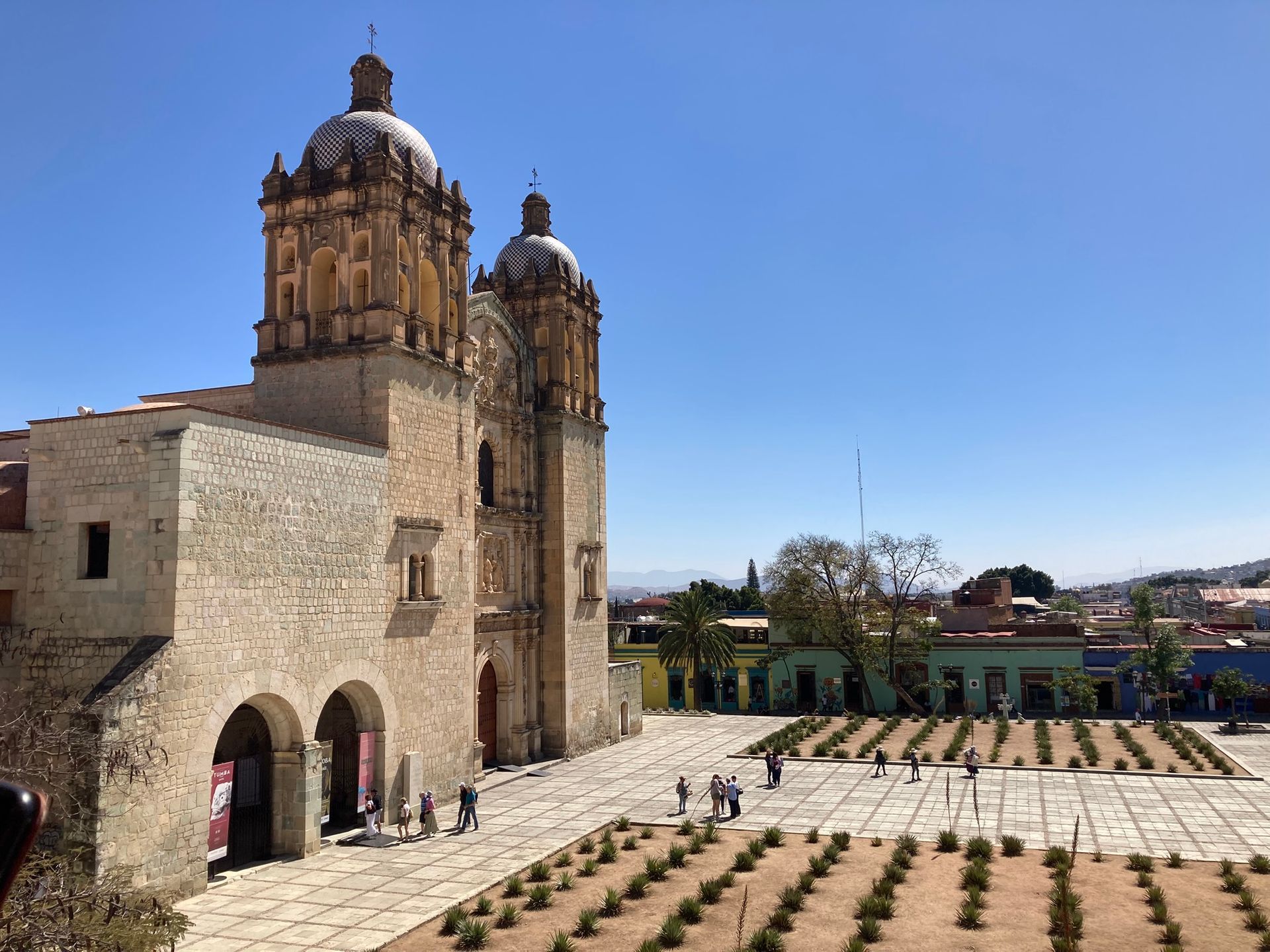
The Templo de Santo Domingo de Guzmán was our first major site in the city, and it set a high bar. The Dominicans began building it in the late sixteenth century and took most of the seventeenth to complete it. The interior is covered in gold leaf and carved stone throughout, designed to overwhelm and instruct simultaneously. After the Reform Laws of the nineteenth century secularised Church property, the building was used as military barracks, and horses were stabled inside. It has since been remarkably restored.
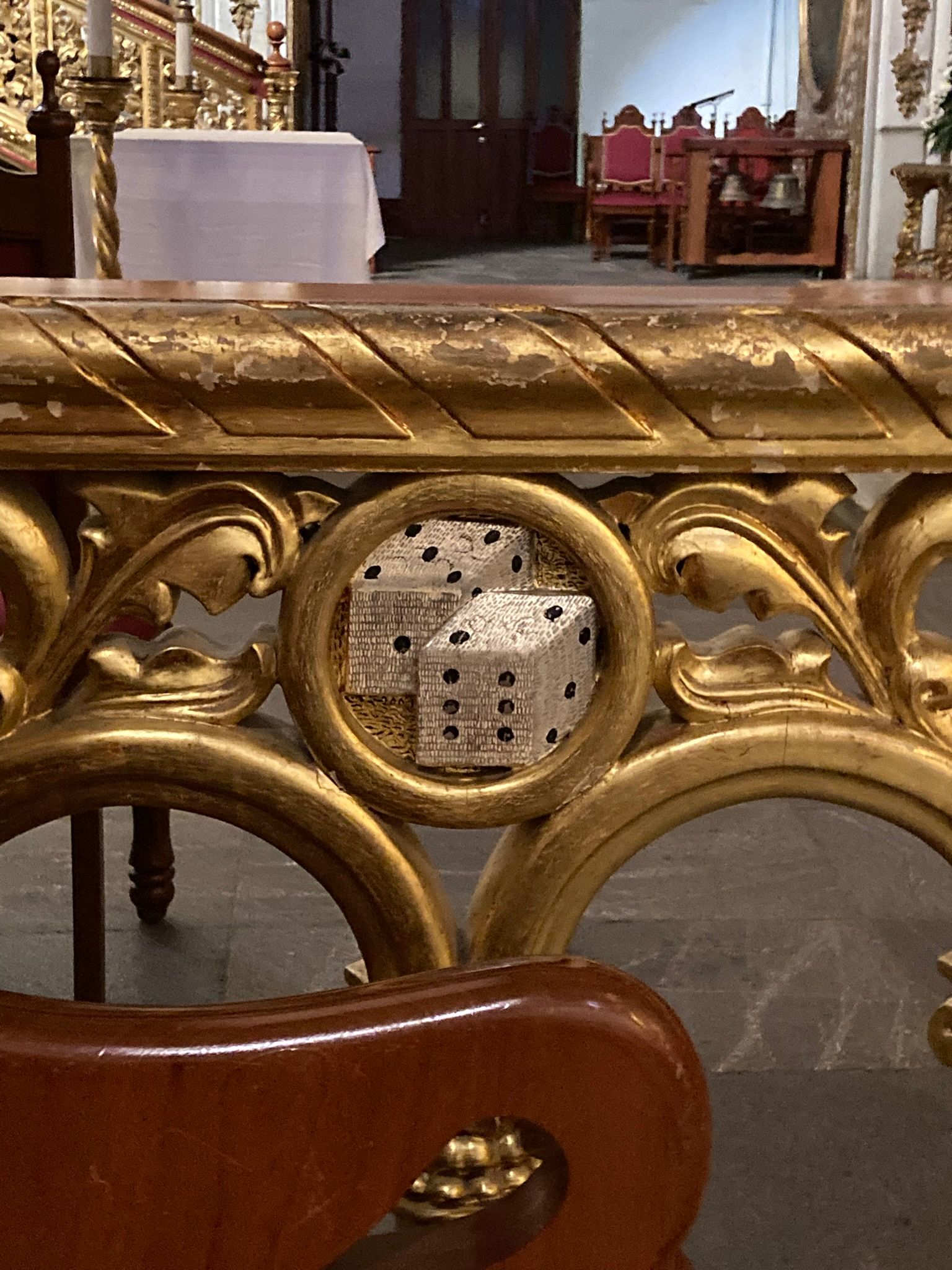
One of the side chapels contained a small carved arrangement of dice, each showing seven. Seven was the Church's number of completeness — seven days of creation, seven sacraments, seven virtues — but the dice also referenced the Roman soldiers who cast lots at the crucifixion. It is a good example of how Baroque churches used everyday objects to make theological points.
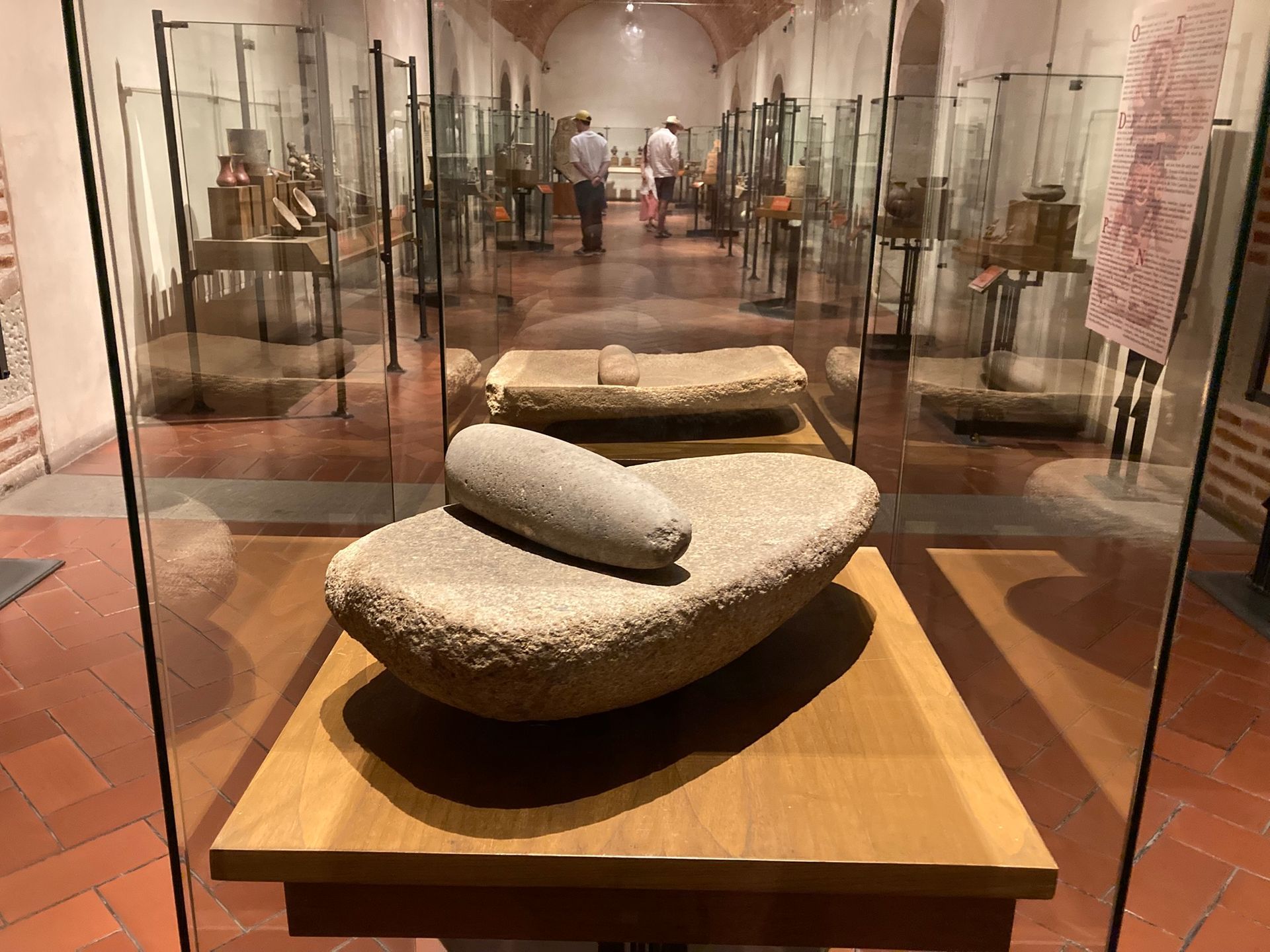
The Museo de las Culturas de Oaxaca occupies the former monastery cloisters of the same complex and covers the region's history from stone tools to the colonial period, with particular focus on the Zapotec and Mixtec civilisations and the changes brought by the Spanish. The building itself was exceptional. Inside, some of the treasures from Monte Albán are displayed, including the famous Turquoise mosaic skull from Tomb 7. Seeing it here gives a tangible sense of the craftsmanship, ritual significance, and wealth of the Zapotec rulers. It’s striking to realise that this delicate, intricate object once rested in a stone-lined chamber high on a mountaintop, alongside gold pectorals and jade ornaments — a private world now made public.
Behind the Templo and the Museo is the
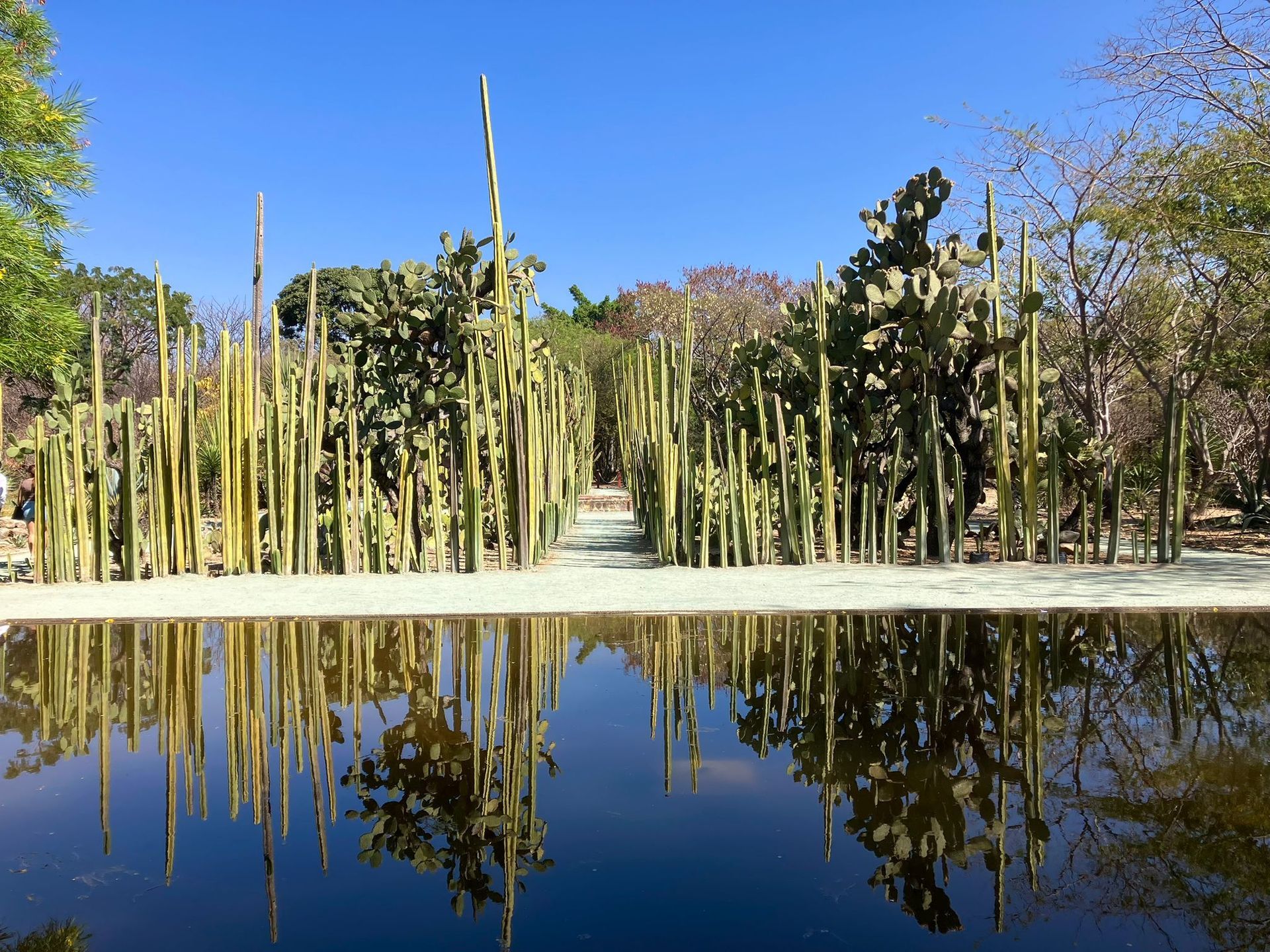
Botanical Garden, which requires a guided tour of twenty minutes — the only way to visit. It held hundreds of cacti in an extraordinary range, some six metres tall, arranged against the old monastery walls. A great kiskadee appeared in one of the small trees: yellow belly, black-and-white head, rufous wings, very loud.
— — —
We booked a shuttle to Monte Albán through Lescas Tours, whose office was directly opposite the cathedral on the Zócalo. Departure was at 8.30am and return at noon — the perfect amount of time. Go early: by midday the heat was considerable, and the site required walking.
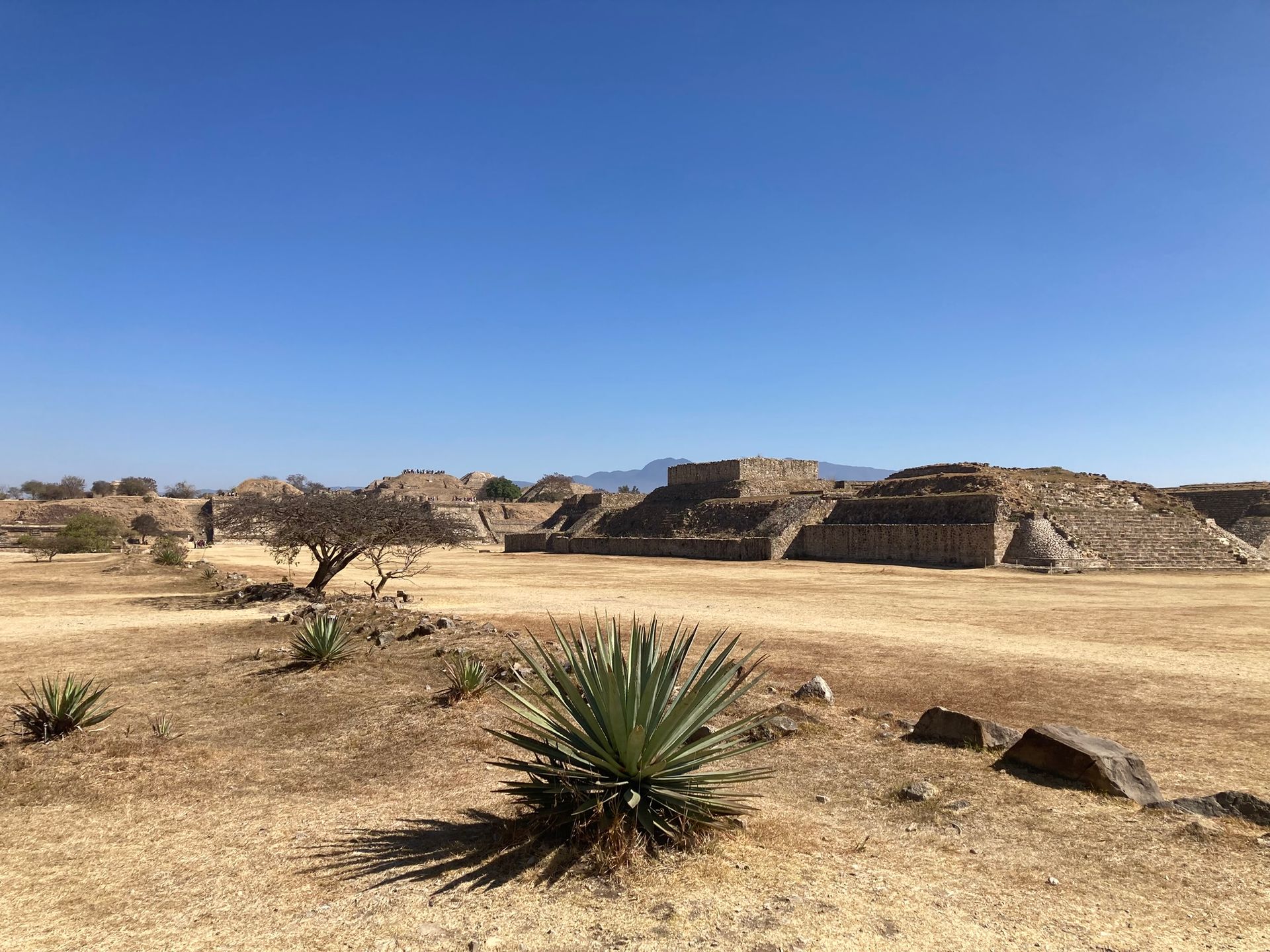
Monte Albán was founded by the Zapotecs around 500 BC. They chose a mountain, flattened the summit by hand — without metal tools or draft animals — and built a vast ceremonial city on top. From the Gran Plaza at the centre, the three Oaxacan valleys opened in all directions, the modern city far below looking small and recent.
The site was more than a single plaza. Surrounding the Gran Plaza were platforms and terraces that supported temples, administrative buildings, and elite residences. Some structures were sunken, some raised, creating a sense of hierarchy and drama across the mountaintop. Step pyramids rise above several terraces — rectangular bases with flat tops where temples or altars were built. These pyramids were not merely decorative: they marked sacred spaces, served as ceremonial stages, and expressed the political and spiritual authority of the ruling elite.
There are five ball courts across the site — rectangular, slightly sunken, and hinting at the ritual and recreational life of the city. Climbing the steps of the terraces and pyramids was a joy. Each ascent revealed new panoramic views of the valleys below, the modern city small and distant. We stopped often to take photographs, and at one point a male Vermilion Flycatcher, its brilliant red head and chest flashing against dark wings, flitted along beside us for a short distance, as if guiding our path across the ancient stones. Monte Albán is not only historically significant but visually breathtaking — a place where scale, light, and landscape meet in a way that leaves you feeling both awed and grounded.
The carved figures known as Los Danzantes, once thought to depict dancers, are now generally understood to show captives, some in positions associated with death or sacrifice. The information boards around the site were clear and worth reading.
We visited Tomb 56: a cool, stone-lined chamber that gave an immediate sense of entering somewhere private and sealed. The tombs were empty, their contents now in museums, but having already seen the treasures from Tomb 7 — the gold pectorals, jade ornaments, and turquoise mosaic skull — at the Museo Nacional de Antropología, we could picture what the chamber had held. Museum first, archaeological site second: it felt like the right order.
The small on-site museum was well laid out, and the café had excellent views over the slopes toward the city, providing a final moment to take in the enormity and grandeur of this mountaintop ceremonial city. Monte Albán is both impressive and intimate — a place where the scale of history meets the detail of everyday ritual, and where the past feels remarkably alive.
— — —
The Mitla tour, again booked through Lescas Tours, with Ángel as our driver and guide, took us to three remarkable sites.
Santa María del Tule was first, home to the Árbol del Tule, a Montezuma cypress known locally as an ahuehuete. It holds the world record for the widest tree trunk, and no photograph can truly convey its scale. The trunk is estimated to be two thousand years old, meaning it was ancient long before the Spanish arrived and predated the conquest by a millennium. Beside it, a sixteenth-century church had been built by the Spanish on a site the Zapotecs had already considered sacred — standard practice throughout the conquest — a reminder of layers of history standing side by side.
Next we visited Teotitlán del Valle, a Zapotec weaving village where natural dyeing and hand-loom weaving have continued without significant change for generations. We watched wool being cleaned, spun, and dyed. Cochineal — a small insect that lives on prickly pear cactus — produces reds ranging from scarlet to deep purple depending on the mix, while indigo gives blue, marigold yellow, and pomegranate skin earthy golds and greens. Black and white sheep’s wool combined creates grey, and limestone shifts subtly altered the colours. Nothing synthetic was used. The loom moved at a steady rhythm, and the intricate patterns emerged line by line, each carrying Zapotec symbols: mountains, rain, protection, continuity. It felt like watching history woven in real time.
Finally, Mitla itself was our last stop, a sacred Zapotec site associated with burial and the priesthood. Unlike Monte Albán, which is open and dramatic, Mitla felt intimate and architectural. The geometric mosaics on the walls — thousands of precisely cut stones fitted together without mortar — were mathematically exact and covered every surface. The Church of San Pablo Apóstol had been built directly on top of the Zapotec temple, its red clay domes rising from the same foundations. When we visited, a service was underway, and the church was full — the quiet devotion inside contrasting with the precision and complexity of the stonework outside.
It was a tour that combined nature, craft, history, and spirituality, each site offering its own layer of wonder. From the awe-inspiring breadth of the Tule tree to the intimate artistry of Mitla’s mosaics, every moment felt deeply alive, a reminder of Oaxaca’s enduring cultural richness.
In Oaxaca, we also explored a rich variety of cultural institutions, each offering something unique. The Museo Textil de Oaxaca showcased indigenous weaving traditions alongside contemporary work, treating textiles as art rather than craft. The Museo de la Filatelia (MUFI), centred on stamps, surprised us with a 1993 Volkswagen Beetle covered in a mosaic of Oaxacan stamp patterns and a world map created entirely through philately. The Centro Fotográfico Manuel Álvarez Bravo allowed us to study classic photography, including Paul Strand’s Mexico, which felt especially resonant in the country itself. The Museo de Arte Contemporáneo offered a window into modern Oaxacan creativity, while the Museo de Arte Prehispánico Rufino Tamayo displayed pre-Hispanic pieces selected for aesthetic quality by the artist himself. We also returned several times to the Centro Cultural San Pablo, a restored Dominican convent that operates as a gallery, library, and cultural hub, where free concerts and workshops brought the city’s artistic life vividly to the fore. Each site was worth a visit, and together they painted a picture of Oaxaca as a city where tradition and contemporary culture coexist beautifully.