Diego Rivera’s Volcanic Dream: Inside the Museo Anahuacalli
There are museums that display a collection, and there are museums that are the collection. The Museo Anahuacalli in southern Mexico City belongs firmly to the second category. It is less a conventional museum than a volcanic fantasy built in stone — part temple, part mausoleum, part artistic manifesto. Visiting it feels like stepping inside the mind of Diego Rivera himself.
What made the visit even more remarkable was how naturally it fitted into a single day moving through Mexico City’s cultural landscape. We began in the historic centre before taking the metro towards Coyoacán, getting off at Viveros/Derechos Humanos and walking through the park towards Museo Frida Kahlo. Ten minutes away stands Leon Trotsky House Museum. From there, we continued by Uber to Anahuacalli, climbing gradually into a landscape that feels less urban and more geological, as though the city itself rests as much on lava and memory as on concrete.
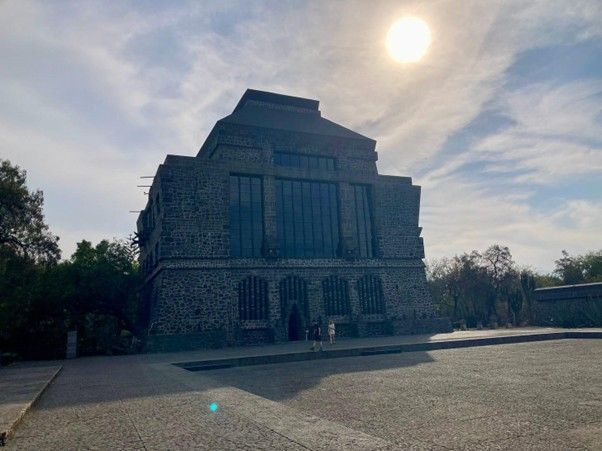
The building rises darkly from the lava fields of Coyoacán like an ancient structure rediscovered rather than constructed. Rivera deliberately used local volcanic stone from the Pedregal landscape, giving the museum the appearance of something rooted directly into the earth itself. The structure seems less designed than excavated.
Rivera created Anahuacalli to house his vast collection of pre-Hispanic art, assembled over decades with obsessive devotion. What makes the museum extraordinary is that the artefacts are not treated as archaeological specimens arranged behind academic labels. Instead, they are presented as art — dramatic, alive, almost theatrical in the way they emerge from shadow and stone.
And that, of course, was the point.
Anahuacalli was Rivera’s homage to the indigenous civilisations of Mexico — not as vanished peoples trapped in history books, but as the cultural foundation of the nation itself. The architecture borrows heavily from pre-Columbian temples: heavy geometries, narrow stairways, low entrances, sacred symmetry. At times it feels Aztec; elsewhere Maya; elsewhere something entirely Rivera’s own invention. It is an imagined Mexico assembled from history, nationalism, memory, and stone.
Inside, the galleries glow in dim amber light. Thousands of pre-Hispanic figures sit in niches and alcoves: ceramic deities, animal forms, ritual objects, faces frozen somewhere between serenity and threat. The displays are deeply aesthetic rather than clinical. Shadows are allowed to gather. The volcanic walls absorb sound. You find yourself slowing down without quite noticing.
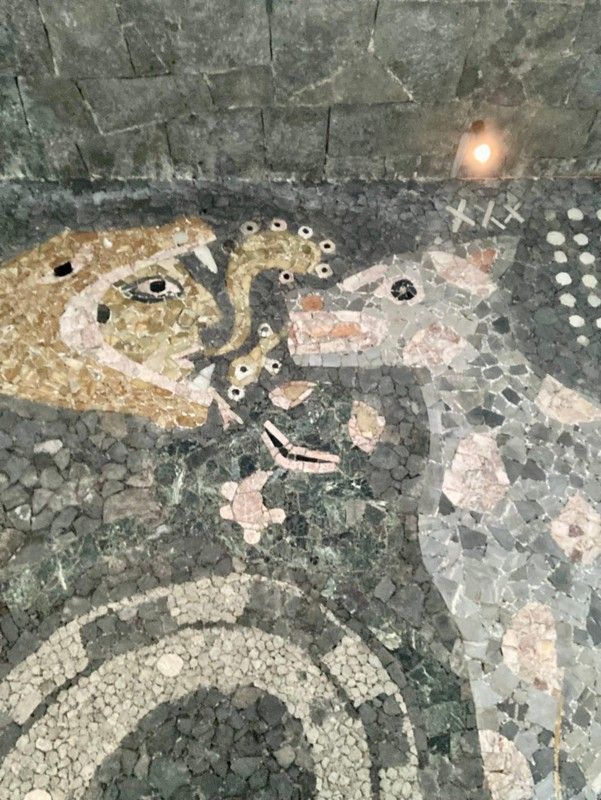
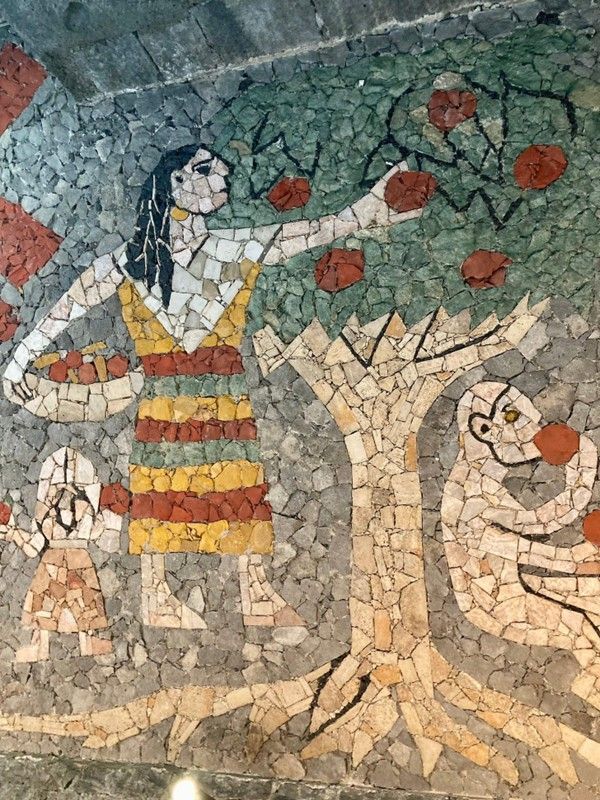
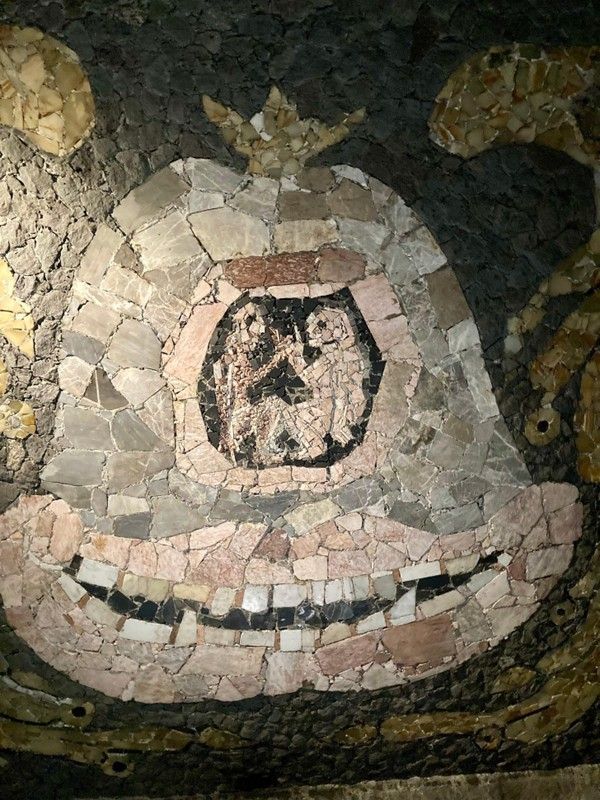
The stone mosaics are among the museum’s most striking details, with patterns running through the building like echoes of ancient symbolism. Nothing feels accidental. Even the windows frame the outside world carefully, turning the lava landscape and distant city into part of the composition.
Then come the views from the upper levels.
As you climb higher through the dark volcanic interior, the museum suddenly opens itself to light and air. From the terraces, Mexico City stretches endlessly beneath mountains and haze. The contrast is extraordinary: inside, enclosed darkness and ancient stone; outside, one of the largest modern cities on earth. Rivera seems to force the two Mexicos into conversation with one another.
What surprised me most was discovering that Anahuacalli remains a living creative space rather than a frozen monument. Alongside the galleries are classrooms and workshops dedicated to art and culture. Students still come here to sketch, experiment, and create. That continuity matters. Rivera did not want indigenous culture sealed behind glass; he wanted it to remain active, evolving, and woven into contemporary Mexican identity.
Later, we took the light rail back towards the historic centre, watching the city slide past the windows until the great white silhouette of Palacio de Bellas Artes appeared once again.
And somehow, that completed the story.
Entry to Anahuacalli was included with our ticket for the Frida Kahlo museum.