Shadows on the Duero:
A Week in Spain’s Forgotten Frontier by Sarah Bilton
In Soria, the River Duero threads through a limestone landscape of watchtowers and fortresses where the Reconquista still feels close to the surface.
For centuries, the River Duero marked one of the most volatile borders in medieval Europe. Here in Soria, on Castile’s high plateau, the boundary between Christian kingdoms and Islamic Al-Andalus shifted back and forth for generations. The result is a landscape where history is not curated behind glass but carved directly into the living rock - a place where the echoes of the frontier are still audible in the silence of the scrublands.
The Sanctuary: A University Reborn
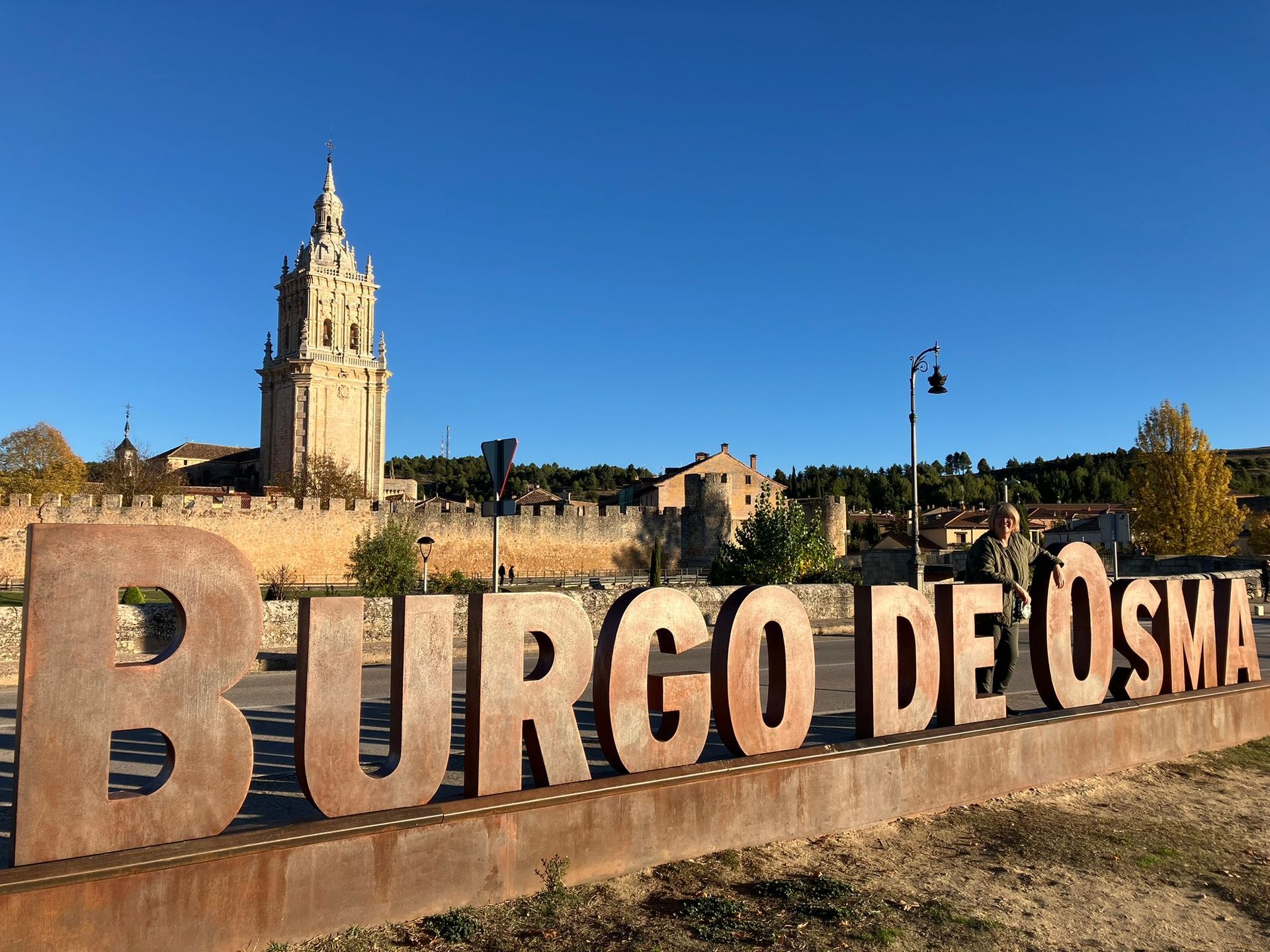
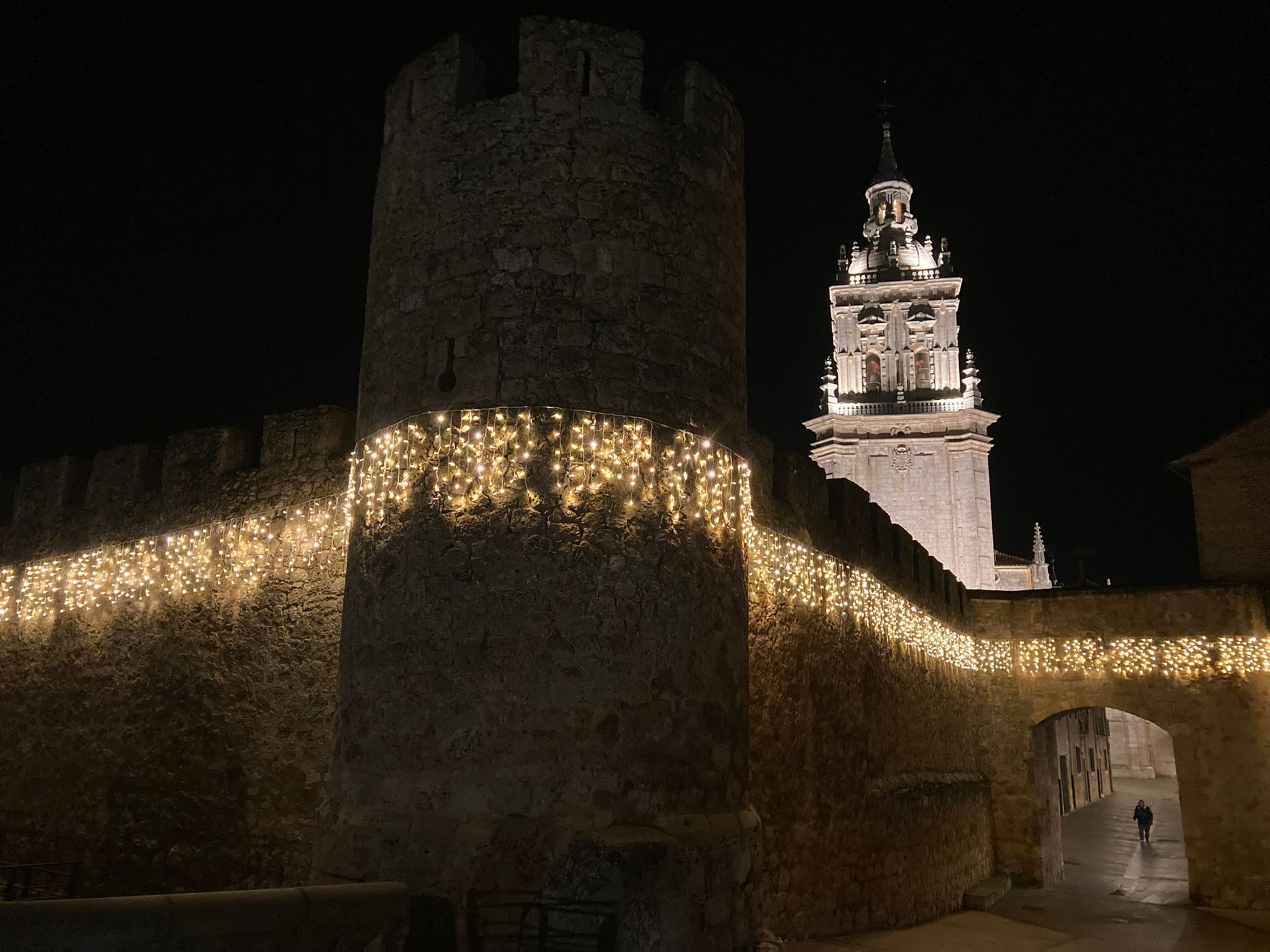
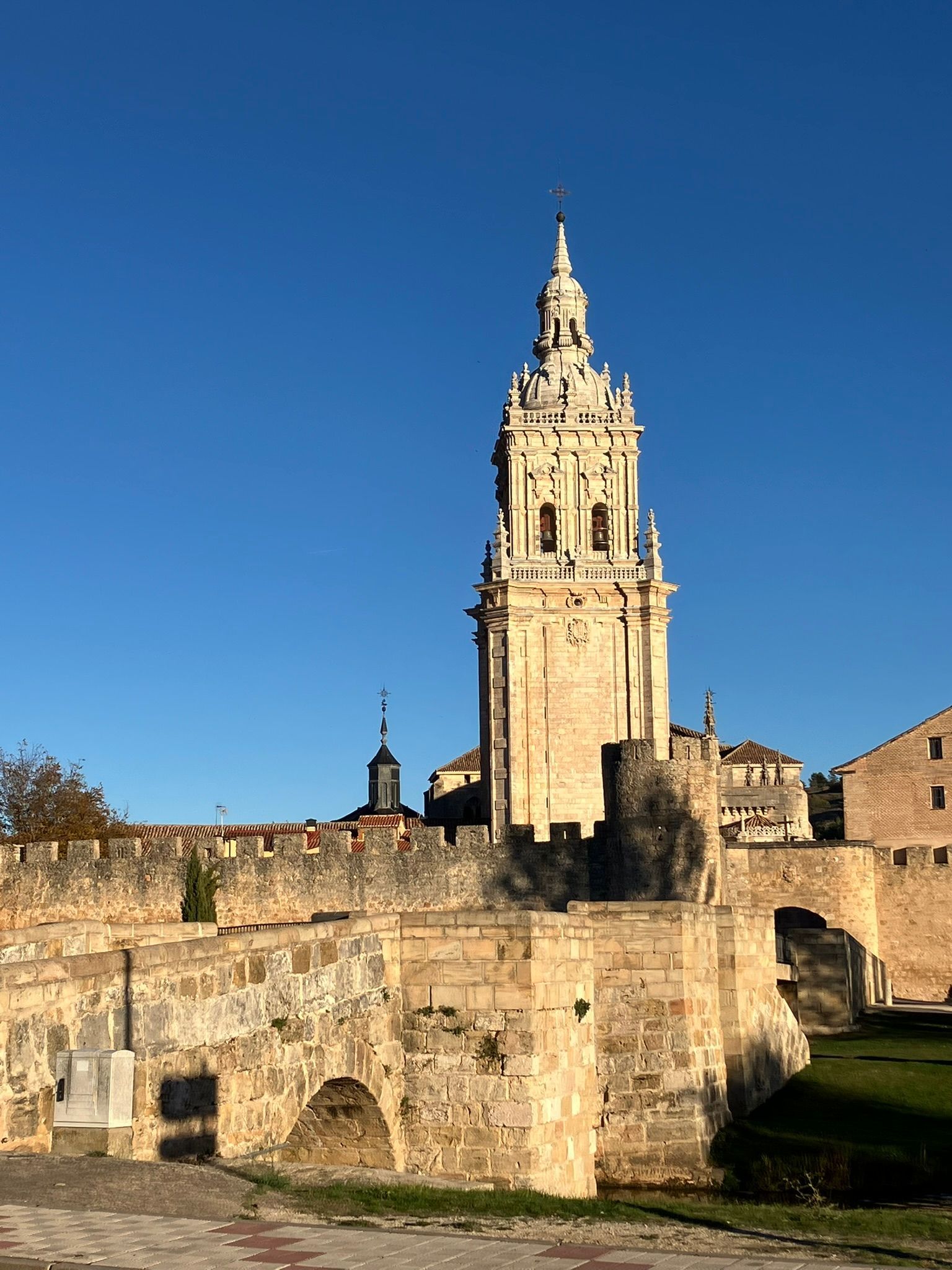
Our gateway to this frontier is Castilla Termal El Burgo de Osma, a 16th-century Renaissance university masterfully reimagined as a thermal sanctuary. Its vast, glass-roofed cloister, presided over by weathered stone gargoyles, offers a cathedral of calm after long days in the field.
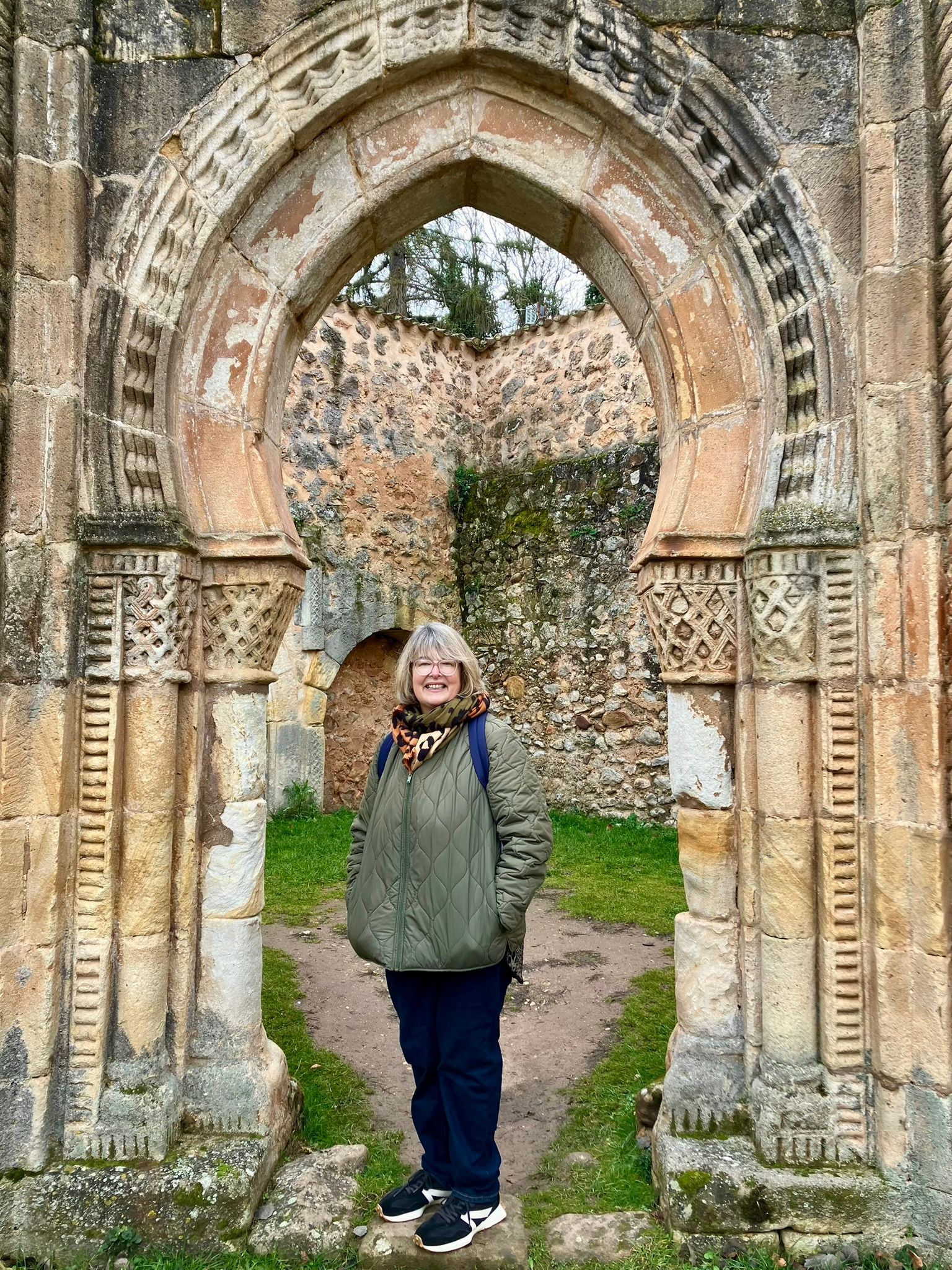
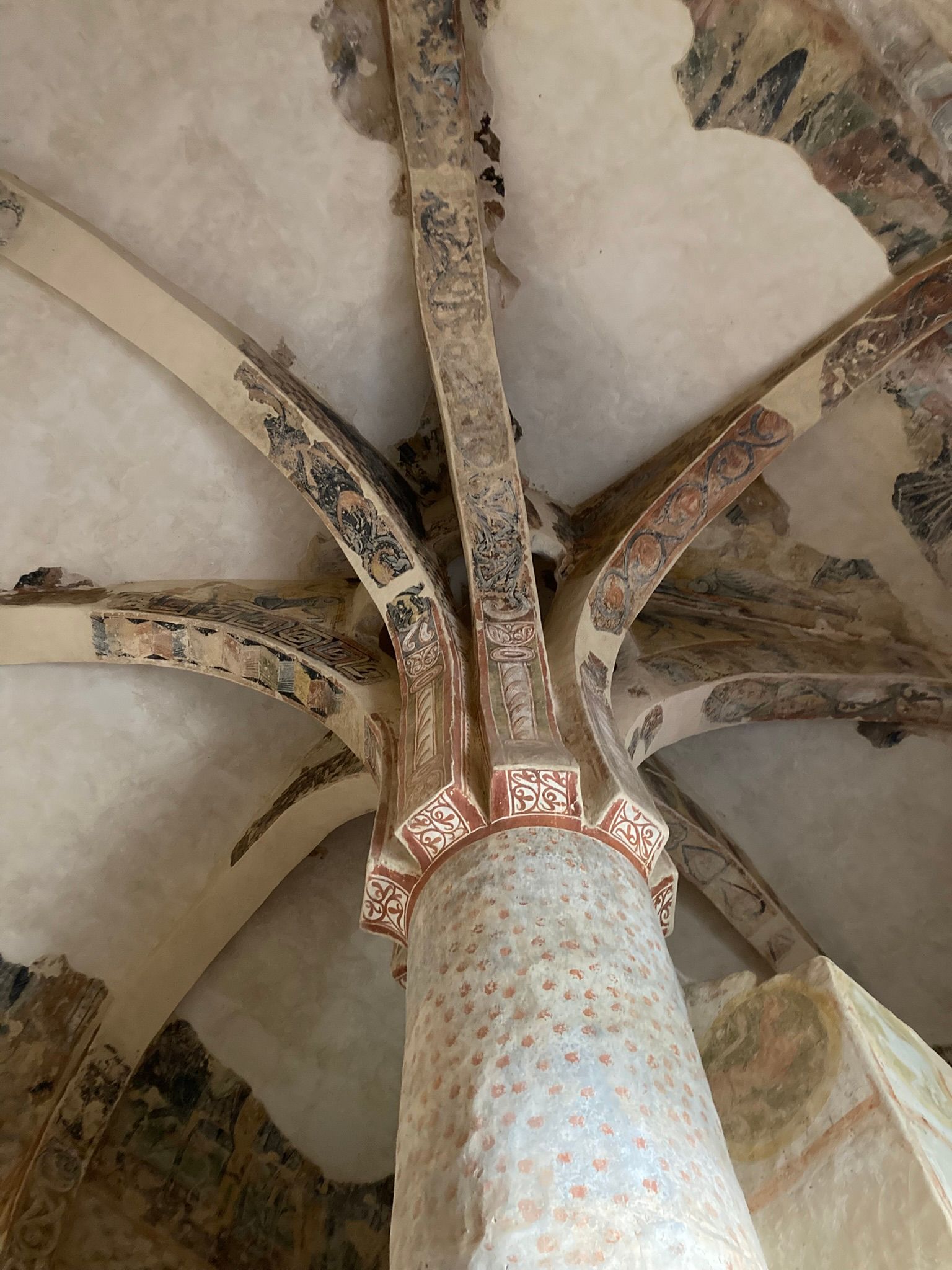
The hotel is a masterclass in history, art, and health. Beneath the Renaissance masonry, ancient Roman mineral springs still feed the vaulted subterranean spa. The heart of this sanctuary is a privileged reinterpretation of the 11th-century Mozarabic chapel of San Baudelio, where eight horseshoe arches rise from a central column to create a space of profound peace. It is an apt introduction to the region: layers of history, quite literally beneath your feet.
The Sentinels of the Limestone
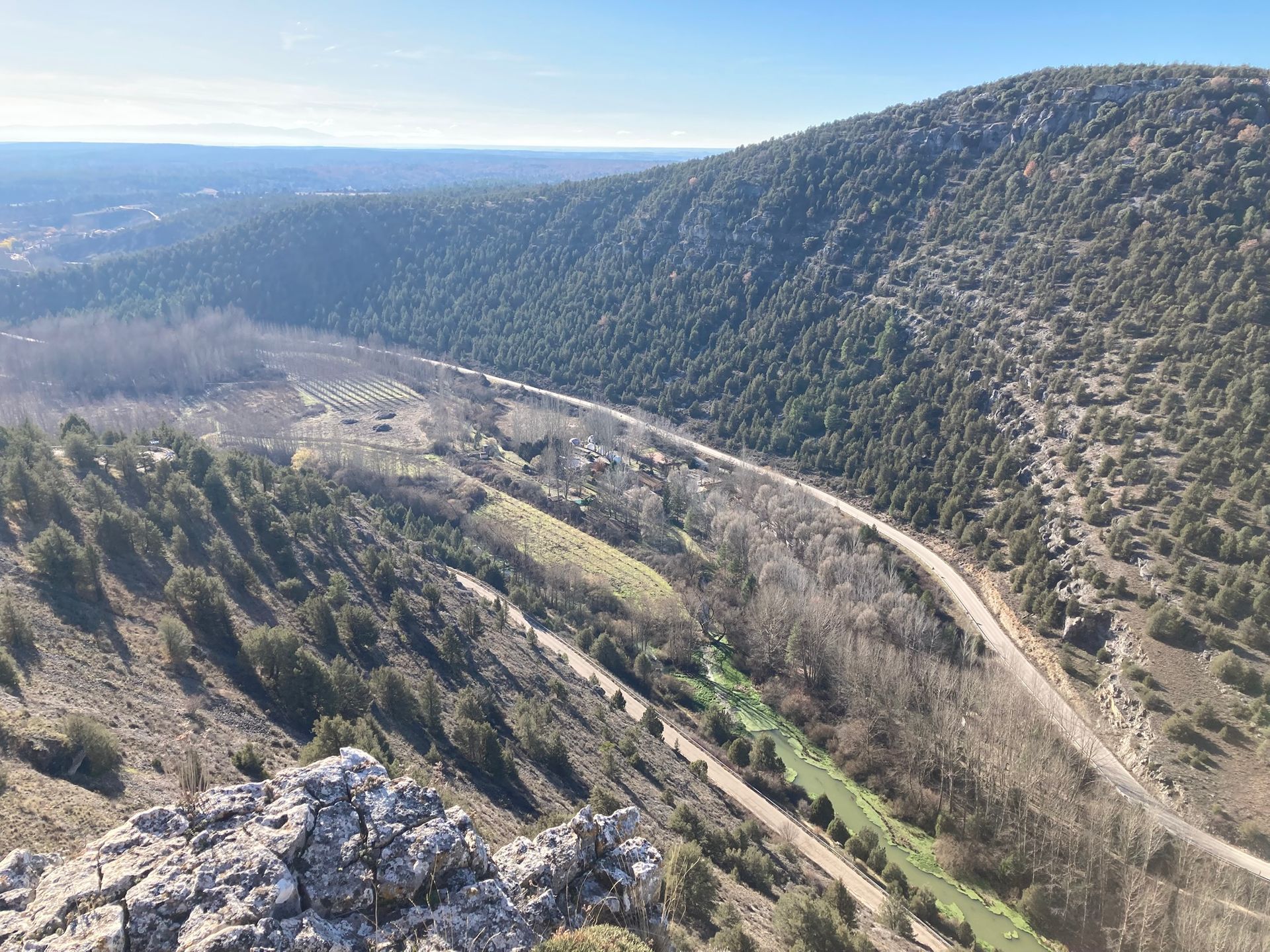
The climb to the Castillo de Osma is a steep, breathless scramble over loose gravel, but from the summit, the strategic logic of the frontier becomes immediately clear. The fortress appears to grow organically from the limestone itself, its walls following the jagged, uneven contours of the ridge.
Directly across the gorge lie the exposed remains of Uxama Argaela. Here, the layers of Spain are visible to the naked eye: Celtiberian foundations, Roman cisterns, and Visigothic traces open to the sky. For those with a head for heights, a climb up the surviving Atalaya de Uxama - a Muslim watchtower-puts you exactly where sentries once stood, using mirrors to signal across the vast, sun-bleached plateau.
The Caliph’s Stronghold
A short drive south leads to the Fortress of Gormaz, once among the most formidable Caliphal strongholds in Europe. Stretching for a full kilometre along the ridge, its scale is extraordinary. Beyond its intimidating presence, the fortress reveals its sophistication through elegant horseshoe arches and a formidable L-shaped gate-a defensive masterstroke designed to break the momentum of any invader.
In the shadow of Gormaz sits the Hermitage of San Miguel, a quiet illustration of the Mozarabic world. Here, architectural details typically associated with Islamic design sit comfortably within a Christian chapel. Its massive stone font, the size of a bath, remains a physical testament to the high-stakes cultural transitions and the meeting of faiths on this 11th-century frontier.
The Palm Tree and the Paintings
The journey into the exotic reaches its peak at the Hermitage of San Baudelio de Berlanga. Inside, a single central pillar branches out like a great stone palm tree, supporting a canopy of horseshoe arches. Although many of its famous frescoes were dispersed to international museums in the 20th century, the soul of the chapel remains intact. Traces of ancient camels, elephants, and bears still haunt the walls-ghosts of an extraordinary Moorish imagination. To understand the story of these "lost" treasures, the museum at nearby Berlanga de Duero provides the essential final chapters.
The Canyon and the Cloister
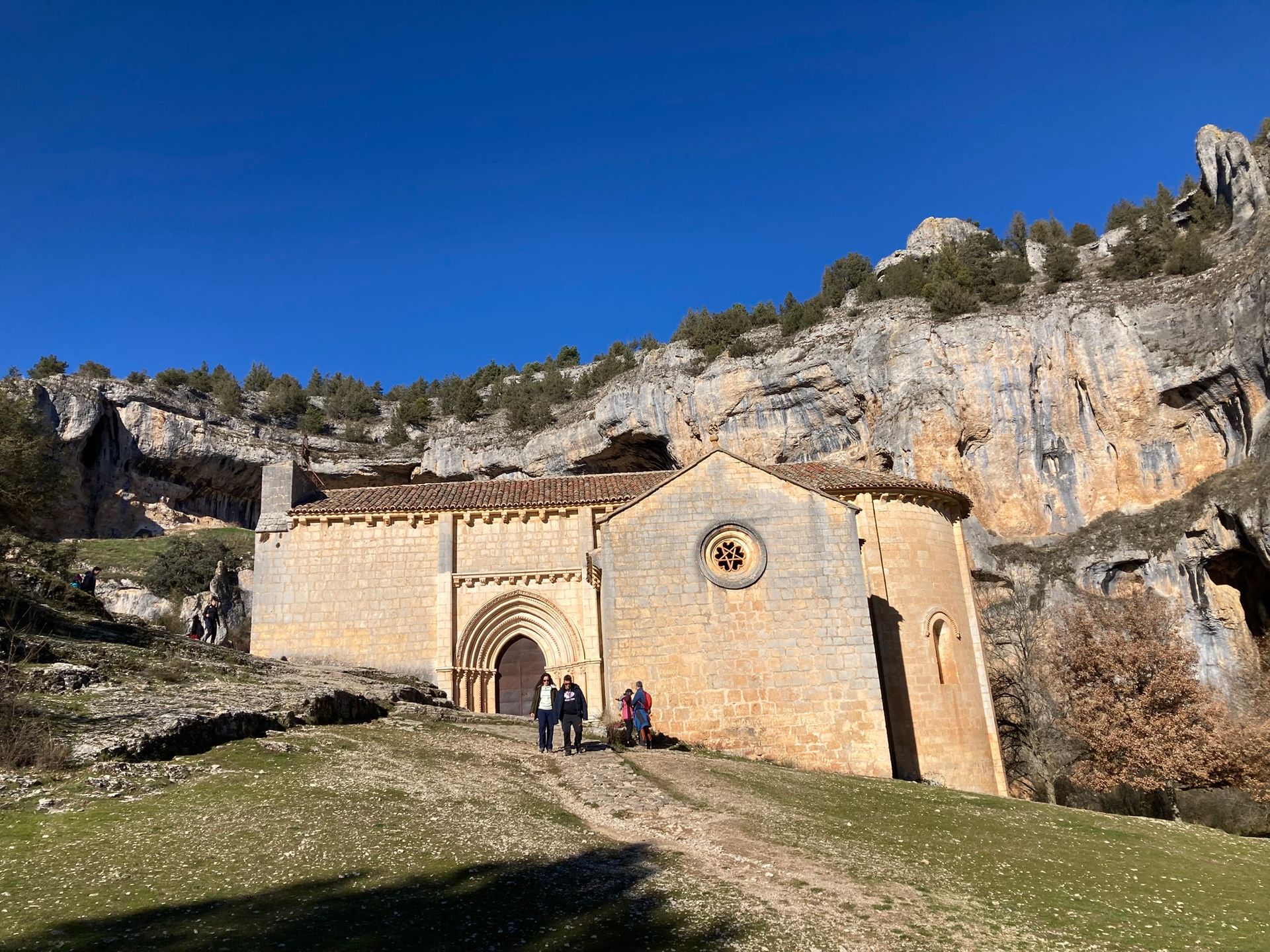
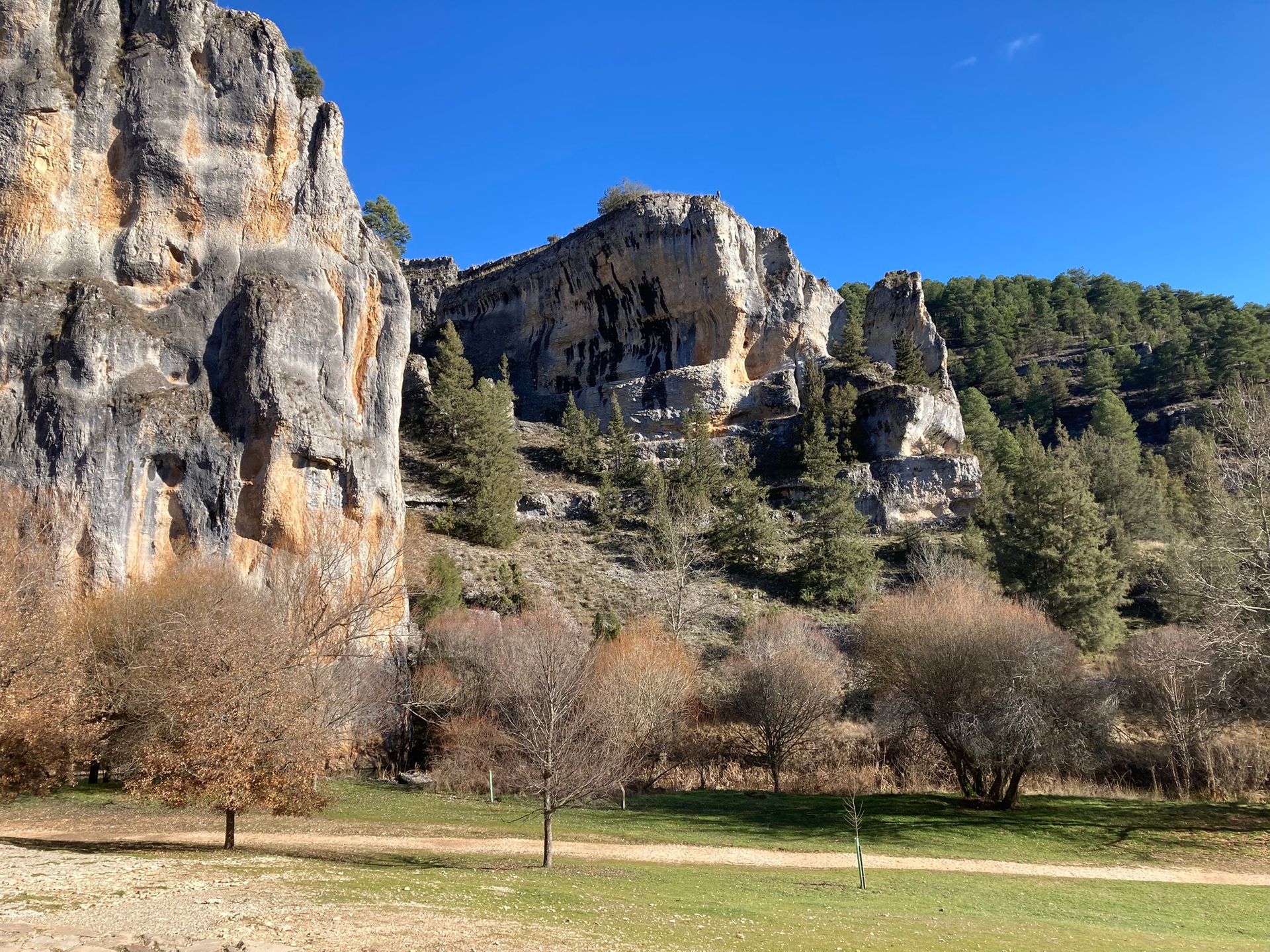
The landscape turns dramatic in the Cañón del Río Lobos Natural Park. Tucked within these towering limestone cliffs sits the Ermita de San Bartolomé, a 13th-century chapel long associated with the Knights Templar. Surrounded by deep caves and the shadows of sweeping vultures, the hermitage’s profound silence invites reflection on the spiritual intensity that once drove the Crusades.
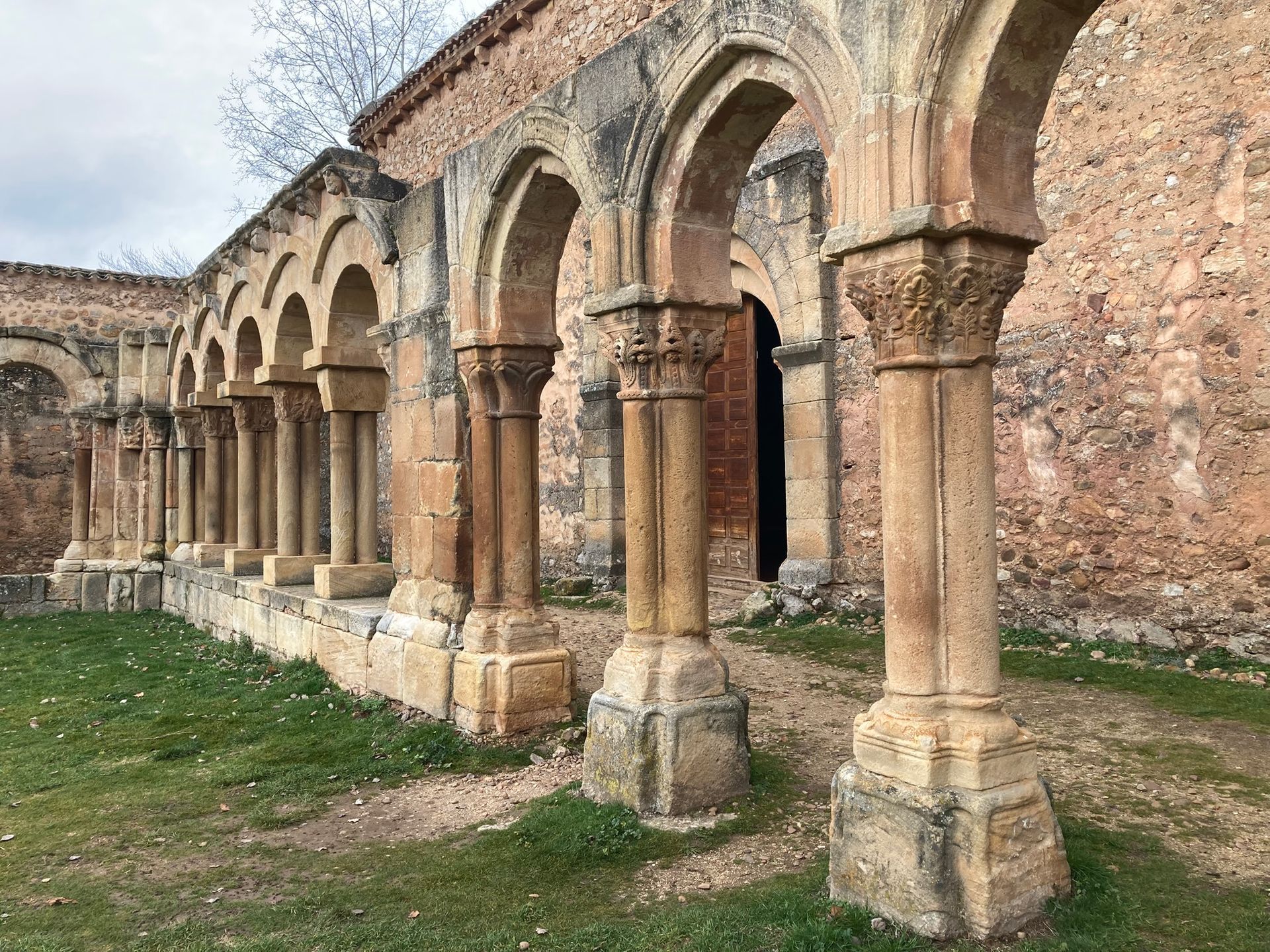
The week finds its artistic crescendo in Soria city at the Monastery of San Juan de Duero. Its open-air cloister of interlaced arches is among the finest expressions of Mudéjar architecture in Spain. Here, the artistic languages of East and West finally entwine, offering a breathtaking visual end to a journey defined by both clash and convergence.
The Living Frontier
What makes the Duero frontier so compelling is the visceral, unpolished way you encounter them. This is not a "theme park" version of the past; it is an authentic corner of Spain where the monumental struggle between the Cross and the Crescent remains etched into the very soil.
You feel it in the steep scramble up a fortress ridge, the chill of a Templar canyon, and the steady gaze of vultures circling ancient watchtowers. Back in the cloister at El Burgo de Osma, soaking in Roman spring water beneath Renaissance arches, the sense of continuity is unmistakable. On the Duero, the past has never quite receded; it has simply waited for you to find it.
Traveller’s Notebook: Navigating the Frontier
The Soria province is best explored by car, allowing for spontaneous stops at the many watchtowers (atalayas) that pepper the horizon.
Getting There:
- By Air: Fly into Madrid Barajas and hire a car for the 2.5-hour drive north to El Burgo de Osma.
- By Sea: For a more scenic approach, take the Brittany Ferries route from Portsmouth to Santander or Bilbao. From the northern ports, it is a spectacular 3-hour drive south through the mountains and onto the high plateau.
The Circuit:
- Gormaz & San Miguel: A 20-minute drive south of El Burgo de Osma. Park at the foot of the ridge and allow an hour to walk the full kilometre of the fortress walls.
- San Baudelio & Berlanga de Duero: 15 minutes further south from Gormaz. Tip: Check opening times for San Baudelio in advance, as they vary seasonally.
- Cañón del Río Lobos: 20 minutes north of El Burgo de Osma. The walk to the San Bartolomé hermitage is an easy 1km flat path from the inner parking area.
- Soria City: A 45-minute drive east. Combine a visit to San Juan de Duero with a walk along the river to the San Saturio hermitage.
When to Go:
Late spring or early autumn are ideal. The high plateau of Castile can be hot in July and cold in winter, but the "Shadows on the Duero" are most atmospheric during the long golden hours of the shoulder seasons.